Discover how rainwater harvesting can reduce environmental impact, improve resilience,
and help homeowners make smarter use of one of nature’s most valuable resources.
Water is one of our most valuable resources, yet most homes are designed to let rainwater become waste.
Unfortunately, every time it rains, thousands of litres of clean water flow off rooftops, into storm drains, and away from our communities. At the same time, municipalities continue investing billions of dollars in water distribution and stormwater management infrastructure to meet growing demand.
What if our homes could become part of the solution?
Rainwater harvesting is one of the simplest ways to reduce water waste, improve sustainability, and create more resilient homes. At Lodestar Structures, we believe thoughtful design can help homeowners make better use of natural resources while preparing for the future.
Rethinking the Purpose of a Roof
Traditionally, a roof has one primary job: keep the weather out.
Our approach is different.
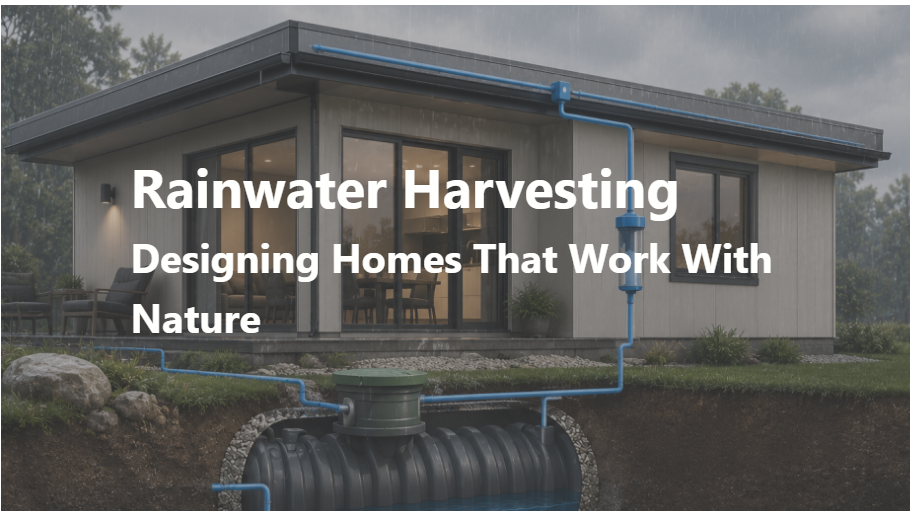
Lodestar’s flat roof systems are designed with rainwater harvesting in mind. When paired with an appropriately designed filtration and cistern system, rainwater can be captured, stored, and used for a variety of non-potable applications, with potable use possible where local regulations and treatment systems allow.
Instead of allowing valuable rainwater to become runoff, the building itself becomes part of a smarter water management system.
The Benefits of Sustainable water management
Rainwater harvesting offers advantages for homeowners, municipalities, and the environment.
Reduce Demand on Municipal Infrastructure
Every litre of rainwater collected is one less litre that may need to be supplied through municipal systems, helping reduce demand on water distribution and stormwater infrastructure.
Help Manage Stormwater
Heavy rainfall can place significant pressure on drainage systems and contribute to localized flooding.
By temporarily capturing and storing rainwater, harvesting systems can help reduce runoff entering municipal stormwater networks.
Improve Climate Resilience
As weather patterns become more unpredictable, having access to stored rainwater can provide an additional level of resilience during droughts, water restrictions, or emergency situations.
Lower Long-Term Costs.
Well-designed rainwater harvesting systems may help reduce water consumption and, depending on local regulations, contribute to lower operating costs over time while reducing pressure on public infrastructure.
A Proven Concept
Rainwater harvesting isn’t a new idea.
Communities around the world have relied on it for centuries.
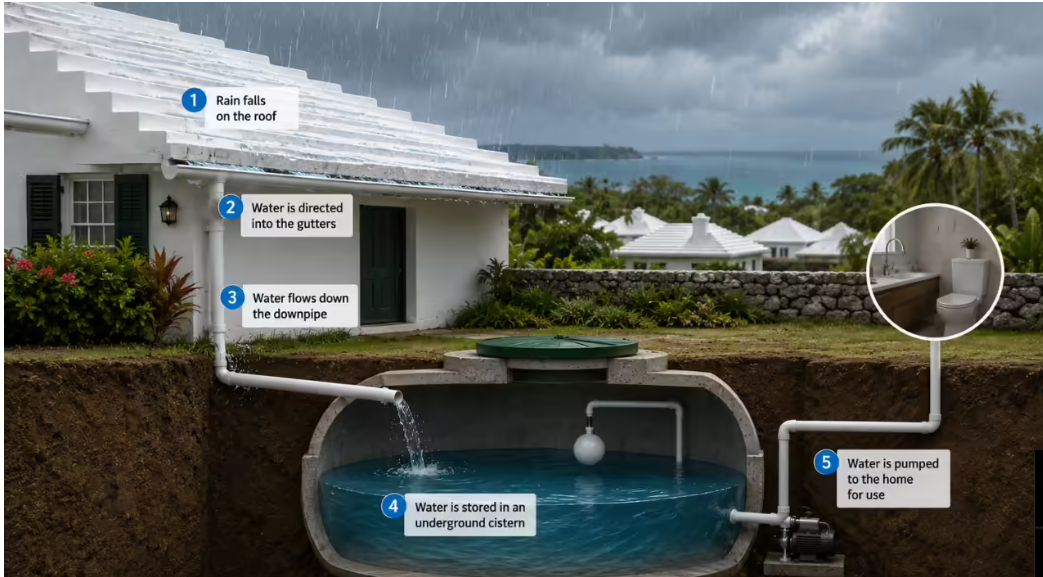
One of the best-known examples is Bermuda, where homeowners have designed rooftops to collect rainwater for more than 400 years. Today, rainwater harvesting continues to provide a primary source of fresh water for thousands of residents. As a result, it demonstrates how thoughtful design can create long-lasting, sustainable solutions.
Designing for the Future
Sustainability isn’t only about choosing better materials.
It’s about designing buildings that perform multiple functions, make better use of natural resources, and reduce long-term environmental impact.
At Lodestar Structures, we believe homes should work harder, for the people who live in them and for the communities they serve.
That’s why our team incorporates the option of rainwater harvesting into every project, giving homeowners practical solutions that support sustainability and long-term resilience.

“Great buildings don’t just protect us from the environment.
They work with it.”
— Jeff Bradfield
CEO | Lodestar Structures
Ready to Make Every Drop Count?
Rainwater harvesting is more than a sustainable feature, it’s a smarter way to design homes for the future.
At Lodestar Structures, we believe thoughtful design can reduce environmental impact, improve resilience, and create lasting value for homeowners and communities.
Discover how thoughtful design can help create more sustainable homes.